The Most Expensive Sound in the Shop
Is Sometimes No Sound at All
For Machine Shop Owners, Nothing Is More Infuriating.
Walk through any busy machine shop and there is a rhythm to the place. Spindles turn. Coolant flows. Chips fly. Then you reach the biggest machining center in the building. Silence. The operator is ready. The machine is available. The next job is on the schedule, but the material is M.I.A.
Over there, another machine just finished an operation but can’t continue because inspection hasn’t released the part. A third machine is sitting, waiting for a program revision. Everyone in the building looks busy, but a lot of really expensive equipment isn’t producing a damn thing.
A Machine Does Not Stop Costing Money When the Spindle Stops
The real hourly cost of your machines includes more than electricity and operator wages. Your shop is also carrying:
- Equipment financing
- Depreciation
- Maintenance
- Tooling
- Software
- Facility costs
- Insurance
- Skilled labor
- Support personnel
Those costs continue whether the machine is producing parts or collecting dust. That is why utilization matters. A machine that appears available for 2,000 hours per year may spend fewer hours actually making chips. The difference is spindle-off time.
The Knowledge Bottleneck
Ask who prepares the most complex estimates in a typical machine shop and the answer is something like: “Joe handles those.” Joe might be the owner, plant manager, senior programmer, manufacturing engineer, or an estimator with 30 years of experience. That experience is valuable, but it is also really hard to scale.
A complicated forged component can’t always be dropped into estimating software and priced automatically. Someone has to interpret the drawing, think through the manufacturing sequence, calculate setup time, estimate tooling, and consider inspection requirements.
For a forged part, the estimator has to understand what is actually going to arrive at the shop.
How much material will need to be removed? What is the surface condition? How much stock exists around the finished dimensions? Will heavy scale need to be removed? Has the forging already been ultrasonically tested?
Every unknown adds time to the quoting process, and every unknown adds money to the quote.
Uncertainty Is Expensive
Estimators have a responsibility to protect the shop. If they do not know exactly how much cleanup a forging will need, they need to allow for the possibility that it will take way longer than expected. That may mean adding machining hours, extra setup time, and additional tooling. As a result, the quote may be safe, but it is not competitive.The alternative is quoting aggressively and praying everything goes according to plan.
That may win the job, but is gonna kill the margin.
Neither approach is great. The best answer is to reduce uncertainty before the estimate is prepared.
Not All Downtime Is the Same
Some downtime is necessary. Machines need maintenance, parts need inspection, setups take time, and operators need breaks. The objective is not to keep a spindle running every second of every shift. The real opportunity is in avoidable downtime.
Many downtime issues have nothing to do with the machine itself. That makes spindle utilization a workflow problem as much as a machining problem.
Material Can Quietly Become a Major Source of Downtime
Here is a good example: a machine shop schedules a large forged ring for Monday morning. The part arrives on Friday, and everything looks good. On Monday, the operator loads the forging. That’s when the reality of the starting condition becomes an issue.
The surface is much rougher than expected. More cleanup is required. Establishing the first reliable datum takes forever. The programmer needs to adjust the initial toolpath because the stock condition differs from what was assumed during programming.
Sure, the machine is technically running, but valuable capacity is being eaten up getting the workpiece ready for the work the customer actually paid for.
This isn’t always counted as downtime. Economically, it has the same effect. The machine is working, but it is not performing high-value, precision operations.
Spindle-On Does Not Always Mean Value-On
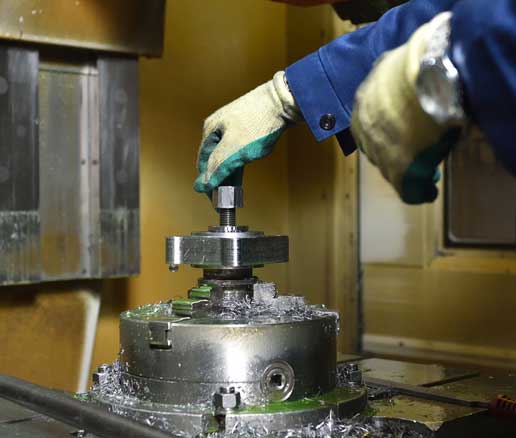
Your machines may be cutting metal but still be underutilized. If an expensive large-capacity CNC machine spends hours removing excess stock that could have been removed before delivery, the spindle is technically operating, but the shop has lost hours of capacity that could have been used for precision machining. That makes material condition part of machine utilization.
All Metals & Forge Group addresses this by typically supplying forged components rough-machined to 250 RMS or better and to within 3 millimeters of finished dimensions.
The machine shop begins with a workpiece that is already substantially closer to the desired geometry.
Save the Best Equipment for the Work That Requires It
Large CNC equipment is usually purchased because it can do things smaller machines cannot, such as handle extreme diameters, turn a very long shaft or perform multiple operations in one setup. Whatever the reason, that capability has value.
Using that machine to perform unnecessary cleanup on an oversized forging consumes capacity that cannot easily be replaced. Starting with a near-net rough-machined forging helps reserve specialized equipment for the operations where it provides the greatest return.
Tool Changes Create Their Own Downtime
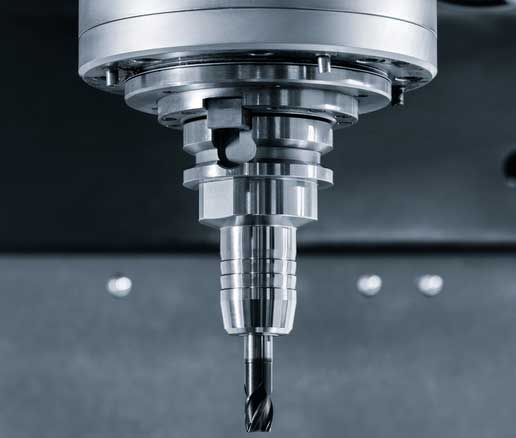
Heavy roughing affects more than machining hours. Large stock removal operations may require multiple inserts, more tool changes, and closer monitoring. Every unexpected insert failure creates another interruption. The machine stops. The operator changes the tool. The program may need to be backed up and restarted.
One small interruption becomes 20 minutes. Repeat that across multiple shifts, machines, and jobs, and the impact becomes a serious issue. Reducing unnecessary heavy roughing can improve uptime indirectly by reducing tooling-related interruptions.
The Worst Kind of Downtime
The shop has already spent hours and hours machining the component. A bunch of operations are done. The part has accumulated some serious value. A material concern is discovered.
Production stops.
Quality, Engineering and Purchasing get involved. The customer may get involved. The machine scheduled for the next operation waits while everyone puts in their 2 cents. If a replacement forging is needed, the disruption can go way beyond just one machine. That is why early material examination matters.
AMFG ultrasonically examines every forging in accordance with ASTM A388/A388M using qualified in-house nondestructive testing personnel. Testing before shipment helps identify reportable internal indications before the customer invests machining time.
Treat Material Availability Just Like Tool Availability
You would never schedule a major job without checking to make sure the machines are available. The same should apply to material.
Before a machine is ever scheduled, the team should know the following:
- When the forging will arrive
- What dimensional condition it will arrive in
- Whether heat treatment is complete
- Whether required testing has been performed
- Whether certifications are available
- Whether the programming team has accurate starting dimensions
- Whether inspection requirements are understood
All this information allows production, programming, and quality to get ready before the workpiece reaches the machine. The less decisions that have to be made while the machine is waiting, the better.
Measure Why the Spindle Is Off
A shop that wants to reduce downtime should first understand what caused it in the first place. Rather than simply recording “machine down,” consider categorizing the lost time. For example:
Material: waiting for stock, wrong stock, unexpected cleanup
Programming: program unavailable, revision required, post-processing issue
Setup: fixture unavailable, excessive indicating, workholding issue
Quality: waiting for first-piece inspection
Tooling: missing tool, unexpected wear, insert failure
Maintenance: breakdown, preventive maintenance
Once the info is visible, you may realize that you don’t actually have a capacity problem, just a material-preparation problem.
Capacity Is More Valuable Than Ever
When demand is strong, machine capacity becomes precious and hiring additional skilled machinists may be difficult. Buying more equipment requires money, floor space, installation, tooling, programming, and training. That makes recovering lost hours from the machines you already have much more attractive.
If better scheduling saves three hours, better programming saves two, and production-ready material saves another six, the shop has effectively created additional capacity without buying another machine.
Keep the Spindles Focused on What Customers Pay You For
Machine shops create value through precision. Customers pay you for your ability to hold tolerances, produce complex geometry, and deliver dependable components.
Yes, removing scale is part of the manufacturing process, but it is not the reason your customer selected your shop. Push that work upstream.
Start Closer To The Finish Line
All Metals & Forge Group manufactures custom open-die forgings and seamless rolled rings for machine shops and OEM manufacturers.
Forgings are typically delivered rough-machined to 250 RMS or better and to within 3 millimeters of finished dimensions. Every forging is ultrasonically examined in accordance with ASTM A388/A388M.
If spindle utilization matters to your profitability, contact AMFG at sales@steelforge.com or submit an RFQ at steelforge.com and start your next machining job closer to the finish line.